

How much Experience is needed to be an Expert?
The truth is, many people in our industry present themselves as marketing or business experts, but genuine expertise is much rarer than the titles suggest. The past few years created favorable conditions for many construction and remodeling companies, making success easier to achieve. But succeeding during a strong market isn’t the same as having the knowledge and strategy to succeed in any market.
Marketing in the construction and remodeling industry is still so underdeveloped that even modest improvements are often celebrated as major breakthroughs.
The better question is not whether your marketing is improving, but what kind of long-term success are you building? Today, more than ever, business owners must balance the pressure of short-term survival with the discipline required to create long-term opportunities.
We often hear stories like, “My father and grandfather were in construction, so I started a website, software, or social media company.” That may be true, and many have built successful businesses. But success during favorable market conditions is not the same as expertise. The real question is this: Would they have succeeded if they had started during a difficult market? And perhaps even more importantly, can they confidently guide others through challenges they have never personally experienced?
The word “expert” is used far too freely today. Much of the advice circulating throughout our industry was developed during one of the strongest construction markets in history. Real expertise isn’t measured by how someone performs when business is abundant. It’s measured by how they help companies navigate uncertainty, protect their brand, and continue growing when conditions become difficult.
I work with many younger professionals, and some are exceptionally talented. What impresses me most isn’t how much they know—it’s their willingness to learn what they don’t yet know. Unfortunately, we’re entering an era where technology makes it easy for anyone to sound authoritative. Advice is increasingly built on AI-generated summaries, recycled opinions, and speculation instead of firsthand experience. Confidence has become easier to manufacture than competence.
Before accepting advice from anyone, ask yourself one simple question:
Are they an expert… or are they simply someone whose only experience came during unusually good times?
During prosperous years, that distinction may not seem important.
During difficult years, it can determine the future of your business.
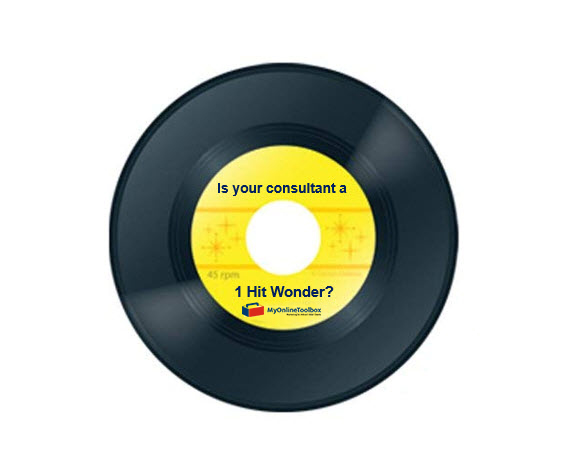
For those who may be newer to the industry, the phrase “one-hit wonder” comes from the music business. It describes an artist who achieved tremendous success with a single hit but was never able to replicate it. The point isn’t to diminish anyone’s accomplishments. Rather, it’s a reminder that one period of success doesn’t always translate into lasting expertise.
Sustained success—whether in music, film, business, or marketing—is built over years, not moments. It requires adapting to changing markets, overcoming setbacks, learning from failures, balancing family and business responsibilities, and continuing to perform when conditions are no longer favorable.
Many younger professionals are exceptionally skilled and often introduce innovative ideas that move an industry forward. Those strengths deserve recognition. At the same time, expertise is measured by more than technical ability or early success. It is earned by repeatedly solving difficult problems, making sound decisions under pressure, and helping others navigate challenges across many different market cycles.
This isn’t about age—it’s about experience. There are situations where fresh thinking is exactly what’s needed, and there are situations where only years of hard-earned perspective can provide the right answer. The title of “expert” is ultimately earned through consistent performance over time, and some aspects of that journey simply cannot be accelerated.
From my perspective, marketing has never been about a website—or any single technology. Too often, someone becomes highly skilled at one discipline, whether it’s website development, Facebook advertising, email marketing, SEO, or AI, and then assumes that expertise in one area makes them a marketing expert.
It doesn’t.
That’s like becoming proficient with Microsoft Word or Google Docs and assuming you’re automatically an accomplished author. Knowing how to use the tool is important, but the tool doesn’t create the story. Marketing works the same way. Technology enables great marketing, but it doesn’t replace strategy, positioning, branding, psychology, or experience.
I didn’t fully appreciate how unusual my background was until people at conferences began asking questions like, “How do you know all of this?” or “What’s your background?” At first, I was uncomfortable answering because it felt self-promotional. Over time, I realized those questions weren’t really about me—they were about credibility. Before someone follows your advice, they naturally want to understand where that advice comes from.
Whether you’re leading a start-up, managing a mature company, or trying to navigate changing markets, experience matters. The ability to recognize patterns, anticipate challenges, and adapt to change is developed over decades, not through mastering a single platform or marketing tactic.
So I’d like to share a little of that journey—not because every milestone is important, but because together they explain how our perspective was formed. My hope is that by understanding where our experience comes from, you’ll feel confident in choosing whether to learn through MyOnlineToolbox or work with us in a more personalized consulting relationship.
My own journey began immediately after college as part of a software start-up. I had a computer engineering degree, about ten years of entrepreneurial hustle from school and side businesses, plenty of ambition, and almost no real business experience. We had very little money, no established reputation, and a single goal: build something that could compete with the industry’s biggest names.
This was long before digital marketing dominated the landscape. Advertising meant print publications, trade shows, direct mail, and yes—even floppy disks.
When you’re short on money, you’re forced to think differently. We certainly were. Every trade show stretched our budget to the limit. Booth space, hotels, travel, displays, advertising—it all added up faster than we could afford. We constantly felt financially squeezed, and as we talked with customers, we discovered they felt exactly the same way.
That realization sparked one of our earliest marketing successes.
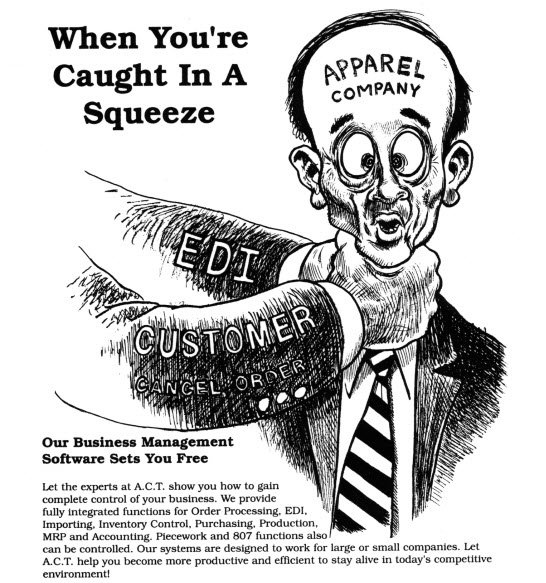
We created a lighthearted advertisement featuring someone who looked financially “strangled” by the costs of running a business. It wasn’t flashy or expensive, but it captured an emotion our audience instantly recognized. Again and again, people stopped by our booth and said, “That’s exactly how I feel.”
The campaign taught us a lesson that has stayed with me throughout my career: people rarely remember advertising because of clever design or expensive production. They remember it because it reflects something they genuinely feel.
That simple advertisement didn’t succeed because we had a large budget. It succeeded because we understood our audience.
As the years went on, the internet became an increasingly powerful business tool—but it looked nothing like the internet we know today. Many of the features we now take for granted simply didn’t exist.
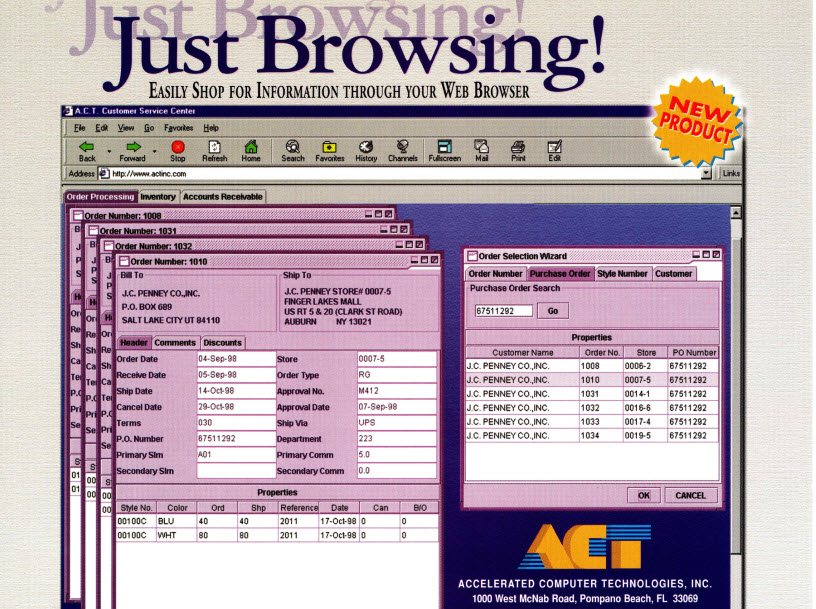
For example, today’s web browsers allow us to open dozens of tabs and switch between them effortlessly. In the early days of the web, that wasn’t possible. Between the early and mid-1990s, people weren’t accustomed to multitasking online because the technology simply wasn’t designed that way.
Rather than accepting that limitation, we looked for another approach.
Our software didn’t have browser tabs, but we discovered a way to create a workflow that gave users many of the same advantages. We positioned ourselves as the multitasking solution, allowing customers to accomplish more in less time. For a period, that single differentiator changed the conversation. Instead of comparing us feature-by-feature with competing products, customers evaluated us based on a unique benefit no one else was emphasizing.
That experience reinforced a lesson that has stayed with me ever since: successful marketing isn’t always about building more features. Often, it’s about identifying a meaningful difference and helping customers understand why that difference matters.
The companies that win aren’t necessarily those with the longest feature list. They’re the ones that create a position in the customer’s mind that competitors struggle to occupy.
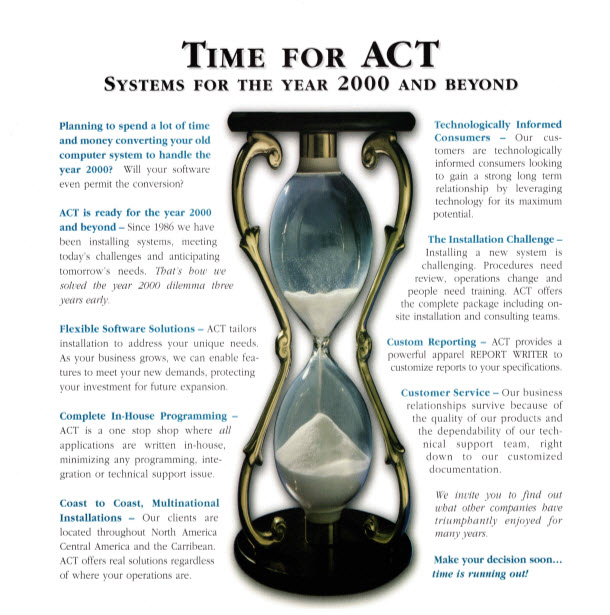
As the year 2000 approached, businesses everywhere were preparing for what became known as the Y2K problem. For those unfamiliar, many computer systems stored years using only two digits. While “99” clearly represented 1999, “00” could easily be interpreted as 1900, creating the potential for serious errors in calculations, reporting, and business operations.
Whether the fears were overstated or not, one thing was certain: businesses weren’t willing to take the risk.
For our company, Y2K created nearly two years of additional business as organizations rushed to ensure their systems would continue operating without interruption. While many competitors continued promoting long lists of software features, we focused on a much more urgent message.
We were ready.
Our marketing wasn’t centered on what our software could do someday. It focused on solving the most immediate problem our customers were facing right now. Timing became our greatest competitive advantage.
That experience reinforced another marketing lesson I’ve carried with me ever since: the best marketing isn’t always about having the most features. It’s about understanding what your audience values most at that particular moment and positioning your business as the solution they need today.
In our case, preparedness mattered more than features—and that difference opened doors our competitors never saw coming.
As the internet began transforming the business world, companies raced to launch new products and capitalize on the opportunity. We were developing our own software tools, and there was no shortage of people encouraging us to package them, raise outside capital, and take them to market.
Fortunately, we already understood something many technology companies overlooked: building a great product was only half the battle. If no one noticed you, it didn’t matter how good the technology was.
Trade shows were still one of the most powerful ways to introduce new products, so rather than waiting for investors to discover us, we made a bold decision. We invested a significant amount of our own money into creating a booth that people couldn’t ignore—complete with custom carpeting and a professional presentation designed to attract both prospective customers and potential investors.
For a young company, it was a considerable financial risk.
But it reinforced another lesson that has stayed with me throughout my career: sometimes the biggest marketing opportunities require confidence before certainty. The goal wasn’t simply to display our product—it was to create an experience that communicated credibility, differentiated our company, and made people stop long enough to start a conversation.
Sometimes the investment isn’t in the booth itself. It’s in earning the opportunity to be remembered.
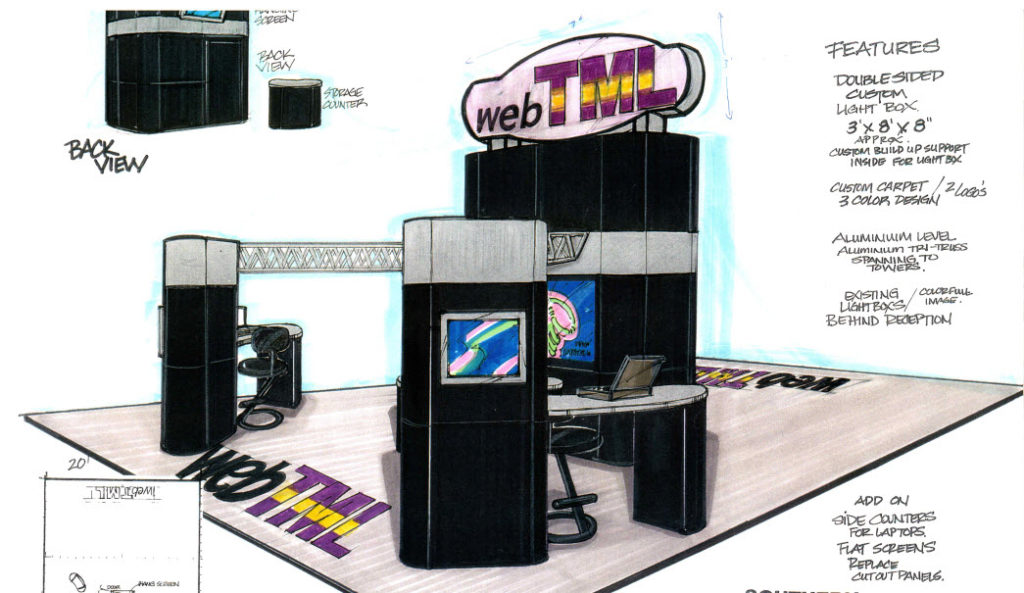
We had no interest in being just another start-up blending into a crowded trade show floor where every company was competing for attention. We knew that if we looked like everyone else, we’d be remembered like everyone else.
So we sought advice from one of our customers—a globally recognized fashion company alled Guess.
Their perspective had nothing to do with software, but everything to do with branding. They understood how to create excitement, attract attention, and make people want to engage. That insight influenced how we approached the show.
Our audience was primarily young programmers, so we intentionally created an energetic, contemporary atmosphere that felt different from the traditional corporate booths surrounding us. We weren’t simply displaying software—we were creating an experience that reflected the personality of our brand.
That decision reinforced another lesson that has stayed with me throughout my career: sometimes your best marketing ideas come from outside your own industry.

My second business eventually led to the creation of my third venture, Investment Café. While every business presents its own marketing challenges, this one required something entirely different. Our audience consisted of high-level financial professionals, and earning their trust demanded a very different marketing strategy than anything I had done before. Once again, I found myself learning how to position a brand for an entirely new market.
After selling my interest in that company, I launched another venture—ServusXchange—with a product called MyOnlineToolbox, entering the construction and remodeling industry for the first time.
Before trying to change the industry, I wanted to understand it.
I attended the International Builders’ Show, walked the exhibit floor, studied the competition, and listened carefully to how companies presented themselves. A pattern quickly emerged. Most exhibitors told remarkably similar stories, making it difficult for buyers to distinguish one company from another. I also recognized that this was a close-knit industry where reputation and credibility carried enormous weight. If I wanted to succeed, I needed to build credibility in ways that extended beyond the industry’s own echo chamber.
I wasn’t simply looking for customers—I was looking for a meaningful competitive advantage.
At the same time, I had become increasingly interested in what would eventually become known as inbound marketing and search visibility. Long before SEO became a household term, I believed that earning recognition from respected third-party sources would become one of the most valuable assets a company could possess. At the time, I’d estimate that almost no one in the construction marketing space was thinking this way.
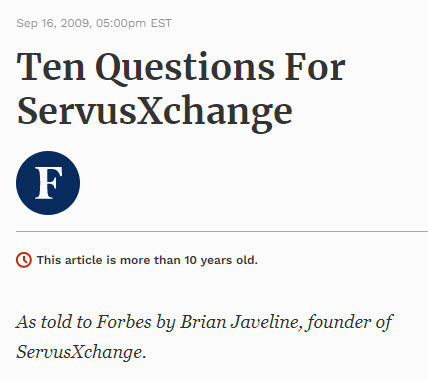
So rather than keeping those ideas to myself, I shared them with a relatively small business publication called Forbes.
Think about that for a moment.
Imagine building one of your very first high-authority inbound links from a publication like Forbes. Long before backlinks became an everyday marketing conversation, I was already focused on building authority, credibility, and long-term visibility—not just generating short-term attention.
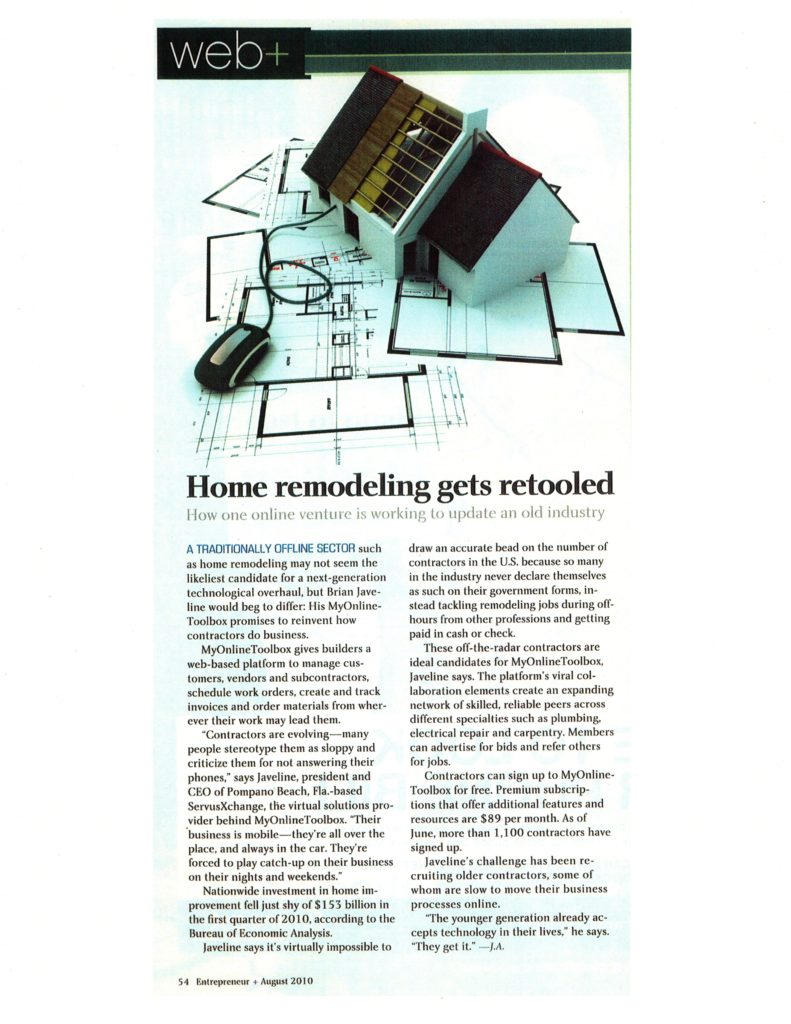
The journey continued with another highly respected publication, Entrepreneur Magazine, where we were featured—another opportunity that helped strengthen our growing reputation.
With that foundation in place, it was finally time to enter the market.
We launched using the traditional marketing channels available at the time—a professional website, SEO, Facebook, YouTube, email marketing, and consistent content creation. But those tactics were never the strategy. They were simply the vehicles.
Our real objective was to ensure that anyone researching our company would quickly discover credible, independent validation of our expertise. We wanted prospects to see that respected organizations were willing to feature our work and trust our insights. Long before online reviews became commonplace, we understood the importance of third-party credibility.
As our reputation grew, so did the opportunities. We became regular contributors to industry newsletters, publications, and educational resources, allowing us to continue sharing knowledge while further strengthening our authority within the marketplace.
That wasn’t accidental. It was part of a long-term strategy to build trust before asking anyone to do business with us.
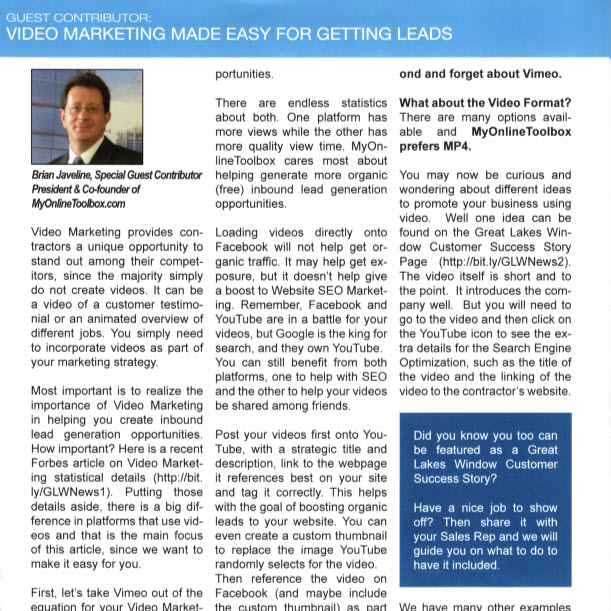
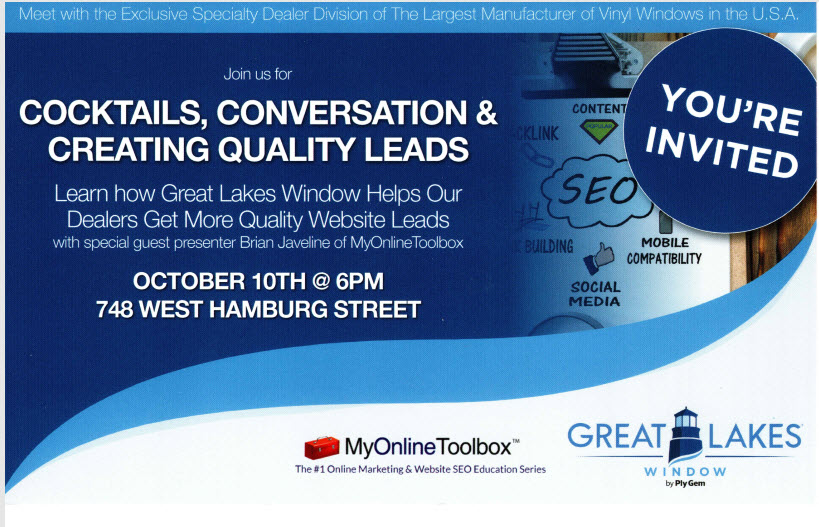
We have been guest speakers for prestigious companies.
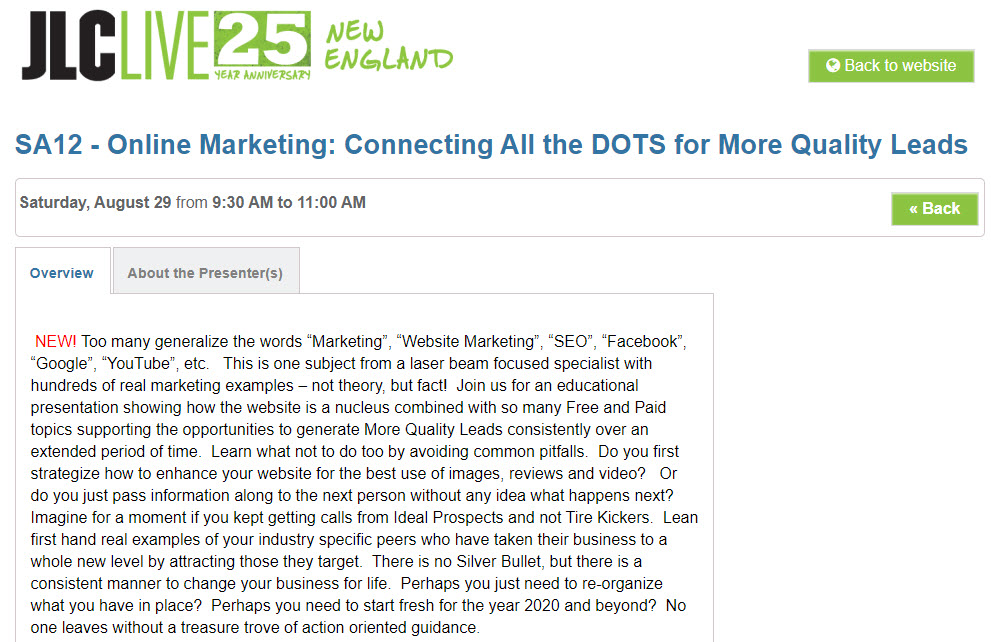
We are now a frequent guest speaker at many industry events such as JLC and IBS-KBIS.

AI is simply the latest chapter in a long series of technology shifts I’ve experienced throughout my career. Just as I studied the early internet, search engines, and social media before they matured, I began researching and teaching the marketing implications of AI well before it became a mainstream topic.
But most important is to get customer reviews all along which is why we can promote 100+ happy customers today on our website (both written and on video).
I don’t believe expertise is something you claim—it’s something others recognize through experience, judgment, and results. After hearing my story, I’ll leave it to you to decide whether I’ve earned that distinction.