

How much Experience is needed to be an Expert?
Let’s face it, there are so many in our industry who promote themselves as some form of marketing or business expert, but the reality is they are not. Yes, they may have been successful in the last few years when it was next to impossible to not have some form of success – especially in the construction and remodeling industries.
My focus is marketing and I see it all too much. Remember, our industry is unfortunately so far behind in marketing that almost anything can be viewed as a success. It doesn’t take much to show progress.
The question is, what type of long-term success are you shooting for? And now, more than ever, you need to also be aware of the lethal mixture of short-term survival with the long-term opportunities.
How many times do we hear things like “My father (and grandfather) were in construction, etc., so I created a website company (or software company or social media company).” That may be true, and perhaps the people have been successful. But how do we know if the same person would have been successful if they started in challenging times? Or how do we know if they can guide someone in challenging times when they never faced a real challenge themselves?
The word “expert” is used all too loosely so simply just be aware that a lot of “expert” advice has come from a lot of good times but we do not know if someone is truly an “expert” to guide you now..
I work with many younger folks and some of them are really good. In fact, I like even more when the less experienced generation is receptive to learning what they do not know. But now we are entering a new era where too many will be looking to give advice, but they will be hard pressed to admit the advice is just being pulled out of thin air, or some random suggestion given by someone else, but definitely not based on experience. Here now lies the challenge to remove themselves from using the word “expert”.
Before listening to anyone, you should begin to ask yourself “Is my adviser actually a one-hit wonder or are they an expert?”. In good times you can get away without asking this question, but not in bad.
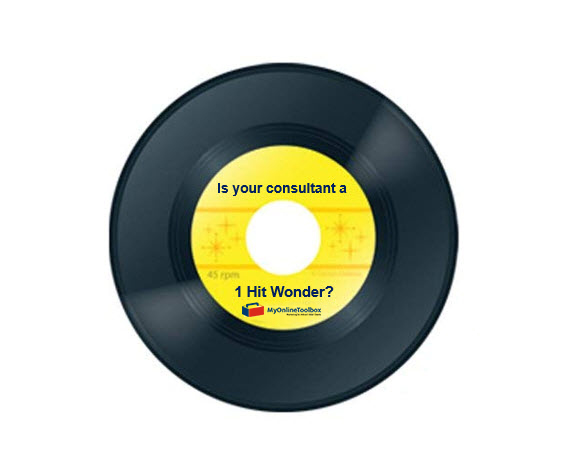
For someone younger (or less experienced being politically correct) reading this, the phrase came from the record business, describing when a singer or group who hit it big but stopped with one song. For those of you who do not know, there were many types of records, and this one above was called a 45. OK, going back to my point, the one-hit wonder didn’t want to be a one-hit wonder, but they simply were not able to go beyond the one song that made them famous. We never want to take away from what you may have accomplished, but we do want you to understand that many are eager to promote themselves as more experienced than they truly are.
Developing beyond one’s initial recognition regardless of whether it is singing, movies, entrepreneurship, or any other specialty is based on a commitment and persistence that defines long term success. And while a younger person may be great at the newest technical topic of the day, it does not necessarily include all the topics of challenges and failures, personal inconveniences of family, or dealing with adversity such as the ones facing us now. This is not to say your heart and mind are not intent on feeling like a long-term expert, but the reality is, experience and time are the only ways to get there. There are times that a client is looking for an expert and unfortunately you just do not have enough life experience to fill that definition.
From my perspective marketing has never been just about a website or any one technology. Too many excel with a particular discipline such as websites, Facebook, Email, etc., and then they claim they are an expert at marketing. That is not the case. It is just like mastering Microsoft Word or Google Docs without admitting you do not know how to write a story. Using Word does not automatically mean you are an author.
I never really thought about it until audience members at speaking events started to ask “How do you know so much?” or “What is your background?”. My reply comes across a little ego-centric, but then again it is needed to be part of being classified as an expert. This goes for good times and bad times, with a start-up company or a mature company that is growing to the next level. And it also includes marketing through changing times.
I will introduce a little history here and attempt to carefully pick what I share so you can see a progression of experience. It’s amazing how much can not be included but still what is shared should give you a great sense of accomplishment. I want you to be completely confident working with us as an expert regardless if you decide to be educated using the MyOnlineToolbox products, or decide to work directly with us on a more personable basis.
Directly out of college I was part of a start up software company. About ten years of street and college hustling experience, but no real business experience, no money and just a desire to dominate the industry. Advertising was mostly print at that time. Happen to remember a Floppy Drive?
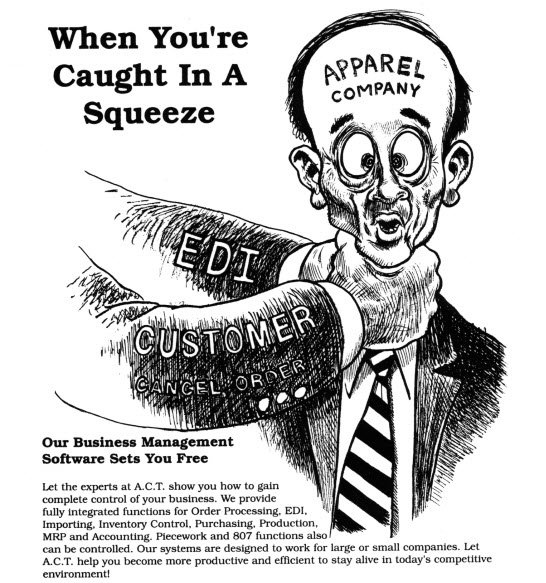
Not having money can force you to sometimes do stupid things. In our case, we were going to shows and simply did not have enough to pay for the booth space, hotels, transportation, all the other stuff, along with a new booth, as well as advertising. Somewhere along the way we always felt we were being strangled and also heard our customers felt that way too. We came up with a silly advertisement to amplify the feeling of being strangled. We were very surprised how many people were enjoying the advertisement and we heard so many times “I feel just like that guy!”. There was an emotional attachment. The advertisement lived on and all we did was change the words on the arms and in the text. We learned how fast you can be successful with your marketing when you truly connect with your customers. Maybe it wasn’t such a stupid idea after all?
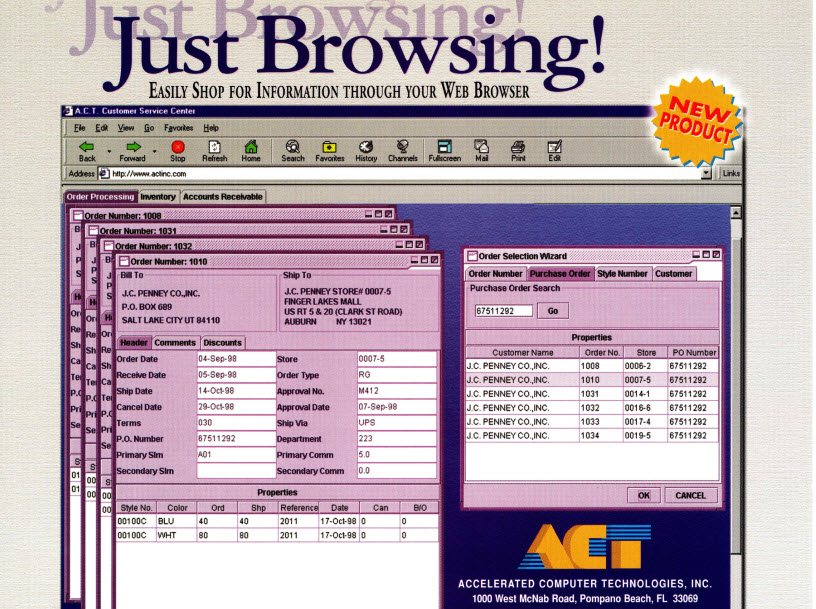
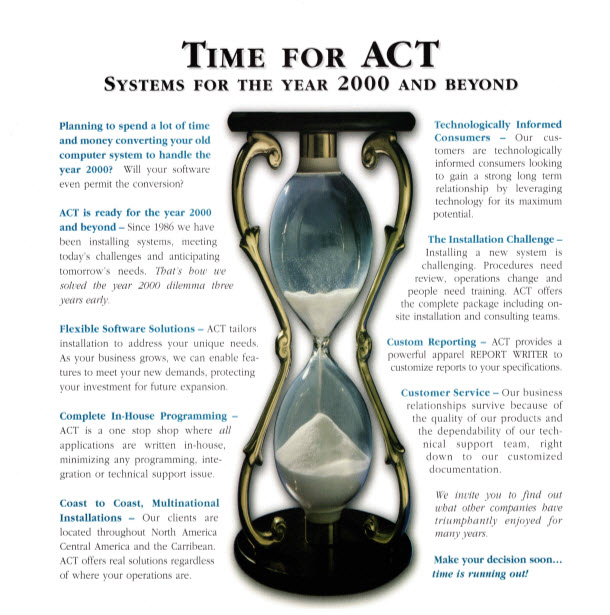
As time progressed, the internet became a transforming tool, but it did not always behave the way you are accustomed to today. For example, many of you are so accustomed to switching between browser tabs to have more than one item active at a time. I personally do not recall when exactly tabbed browsing became prevailing, but there were many years between 1990 and 1997 when people were not accustomed to doing more than one task at a time. Look closely and you will not see any tabs below. But we did create a way to “trick the browser”, and we started to promote ourselves as a multi-tasking alternative. For a period of time, no one even compared us to other products. This one feature became a major efficiency increase that no competitor could touch. While others were focusing on features, we were focusing on differentiating ourselves.
Some years passed and the world slowly went a little bonkers as the year 2000 approached. It was referenced as the Y2K end of the world by some. For the younger folk, the Y2K technical issue was based on software systems using just two digits to represent a date. 99 was assumed to be 1999. The problem was that 00 was going to be assumed as 1900 and not 2000. In theory, all new transactions that would be starting as of January 01, 2000, technically would be sorting earlier on reports with the assumption the event happened on January 01, 1900. We easily had about two years of business coming our way just based on this one issue. Some of our competitors were focusing so much on the features of their new systems. We decided to just focus on the lack of time to make a decision. Our unique difference was being ready to address the time constraint, while our competitors were busy selling features.
The internet then grew wildly and people were falling all over themselves to bring products to market. We created our own development tools and everyone was telling us that we needed to package our tools, raise a gazillion dollars and bring our product to market. We already knew how to market at trade shows, so now we used a massive amount of our own cash to create a really cool booth to attract customers and investors. The custom carpet in addition to everything else costs a fortune.
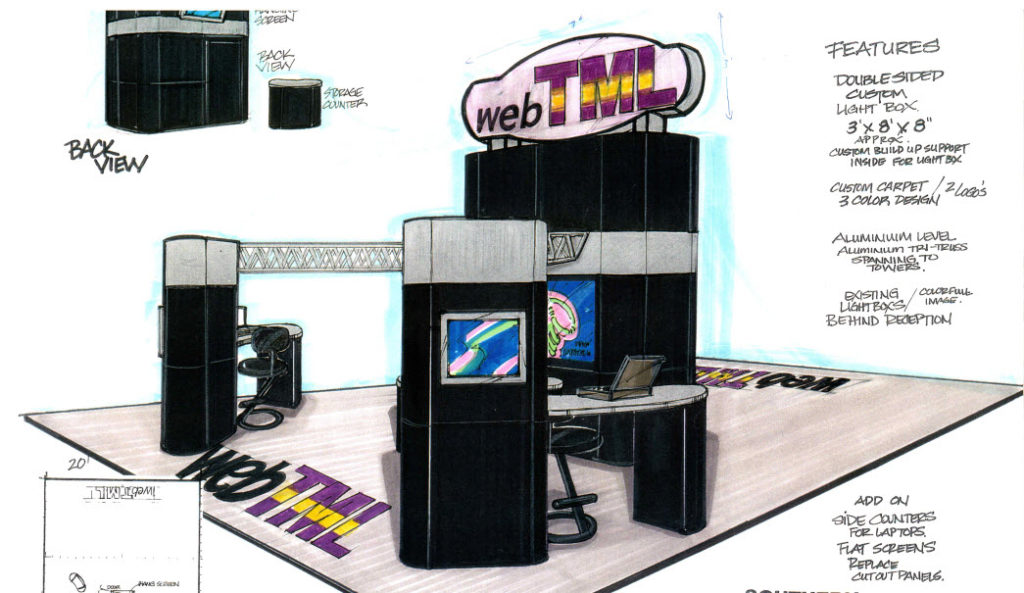
We didn’t want to just be another fresh face at a show where everyone was throwing cash around to get attention. What we did was get some advice from one of our customers, a little fashion company you may have heard of, named Guess to help us get attention. A lot of hype was needed to create a hip atmosphere for our target customer, the younger generation of programmers.

My second business led into the creation of the third business Investment Café which had its own marketing challenges. The biggest challenge was targeting a top tier financial crowd. The experiences were unique onto themselves.
After selling my interests from this third business it was time to create a new business called ServusXchange with a product identified as MyOnlineToolbox and break into the construction industry. I went to a show called the International Builders Trade Show and studied all the future competition. Almost everyone in each booth would say the same story about how they got started. I also realized the industry was so tight knitted that I needed to get credibility externally. In other words, I was studying the market to gain a competitive advantage – whatever that was going to be.
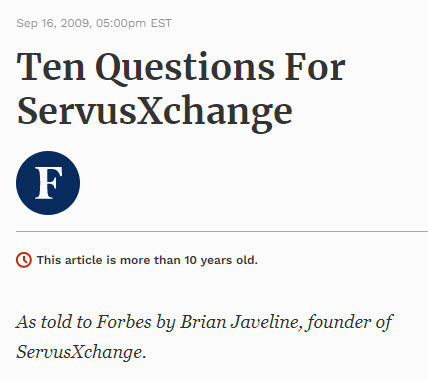
My goal was to begin to get traction for inbound rankings. I would say that 99% of the people I was going to compete with had no real idea of what I was even talking about (at least back then). So I took the ideas to a little financial magazine named Forbes. Imagine something as that being one of your first inbound links.
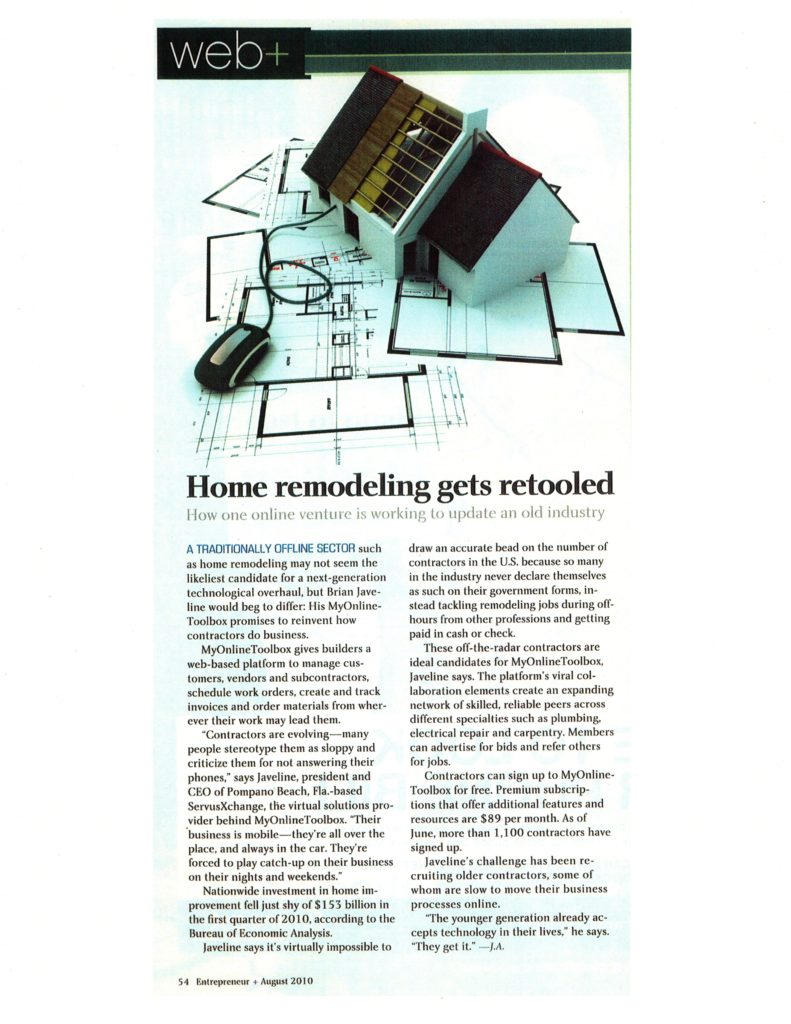
Then it was off to another little magazine (I am being facetious) called Entrepreneur Magazine and was featured there.
Now it was time to enter the market. I then started with traditional marketing of a website, SEO, Facebook, YouTube, etc. People then went to check us out. We were extremely focused on ensuring there was some high-level external credibility.
Flash forward to the present to see we are contributors to many company newsletters.
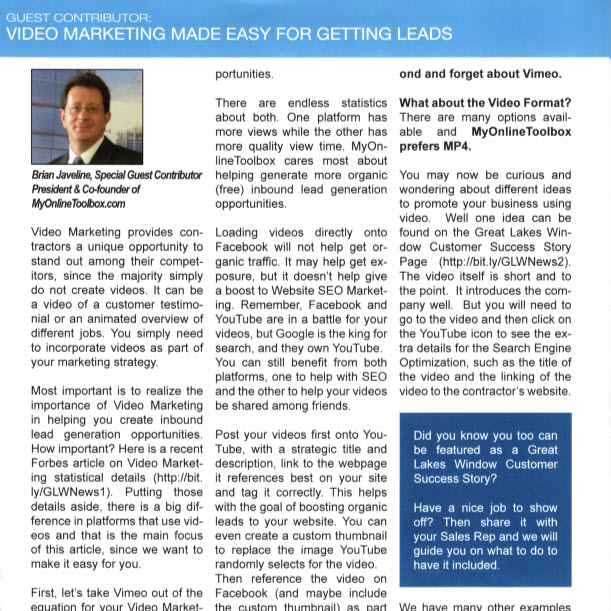
Flash forward to the present and now we are guest speakers for prestigious companies.
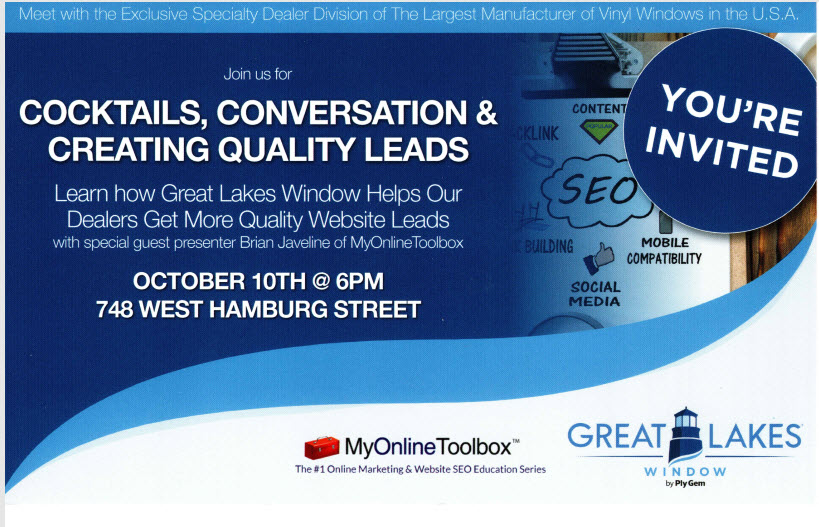
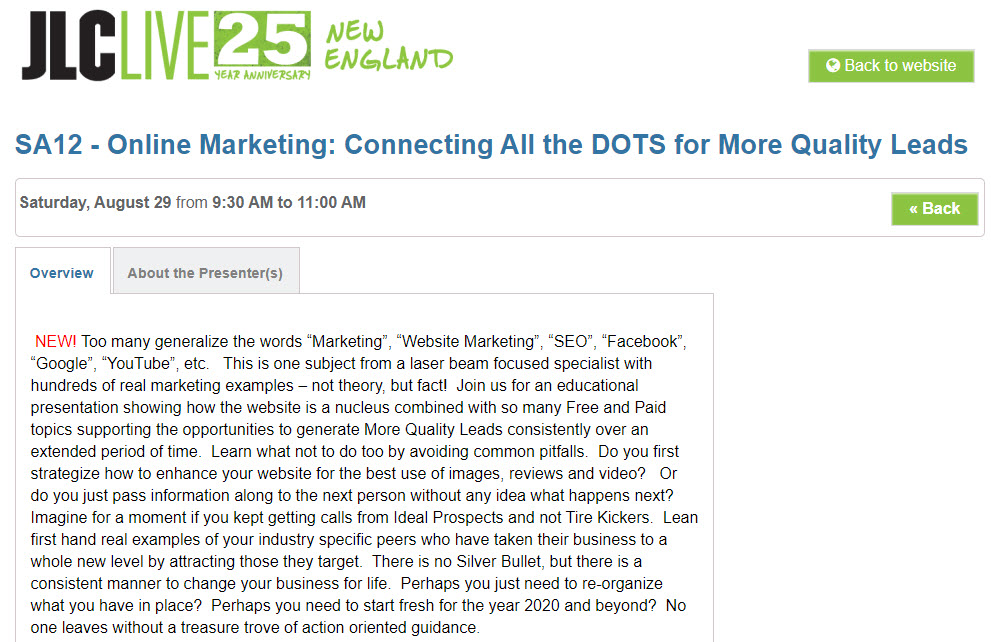
Flash forward to the present and I am a guest speaker at many industry events such as JLC and IBS-KBIS.
But most important is to get customer reviews all along which is why we can promote 100+ happy customers today on our website (both written and on video).
Am I an expert at marketing? I guess I will leave that up to you to decide.